
Articles
What is Digital Health?

Nowadays as result of growing development in communication technologies, a lot of things was not part of our life but now they are part of our life like internet, smartphone, social media etc. We use this technology in part of our life. We use for our communication video or voice or for learning we use online learning. We pay our billing from online bank or register online or online test or online meeting. All of them come to our life in short period of time.
The development of digitalization and communication technology shape every area of our lives. It is not possible that health services and the quality of these services will not be affected by this development.
All health organizations increase the quality of the services that they present to customers. Cost and performance are most important criteria for health organization in their services. Hospitals use technology to present their services to customers. Some technologies in hospitals are :
- A certified, efficient EHR system.
- Hospital information system
- Laboratory information system
- Radiology Information System
- PACS
- Telemedicine
- Teleconsultation
- Surgical and service line technologies
- Smartphones, tablets and applications
- Hybrid operating rooms
- Telehealth tools
- Ultrasound imaging devices
- Infection detecting technologies.
- Healthcare staffing management technology
- Tracking of patients
- Indoor navigation for patients and visitors
- Tracking of hospital beds and medical devices
- Inventory management of medical assets etc.
What is Medical Informatics?
Medical informatics is located at the intersection of health, medicine, information technology (IT), computer science, bioinformatics, bio-statistics, statistics, health management, social care, wellness.
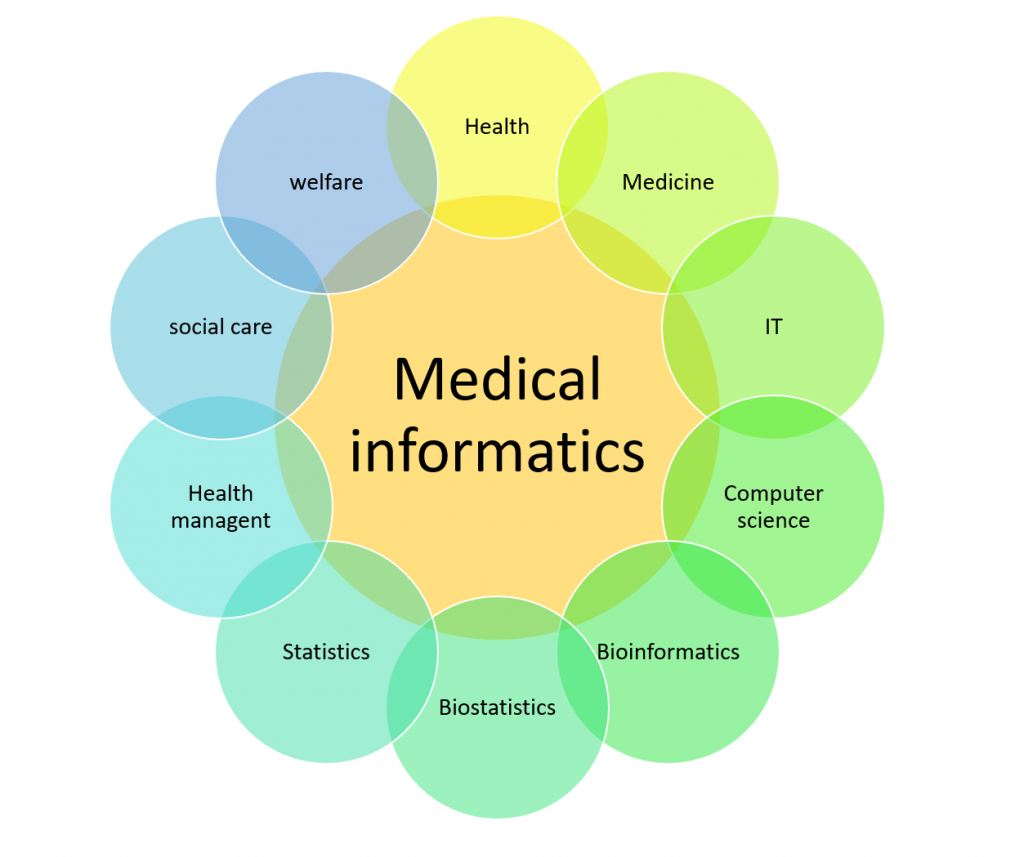
Medical informatics, which is located at the between of information technologies and health sciences and played important role in theoretical and academic research as well as in various medical research and development. Medical informatics techniques are used on a global scale for process and evaluating data collection of health centers to achievement true, particular, and reliable result.
What is digital health?
The term “digital health†is used in the various fields such as medical informatics, but there is not agreed upon definition for this term.
In the past decade WHO (world health organization) and many countries has attracted lots of attention to implementation of digital health. WHO emphasizes that digital health can be beneficial to achieving the Sustainable Development Goals by making health and well-being services accessible with high standards for all people globally.
Digital Health is an emerging field at the intersection of healthcare and digital technologies. Digital health considers a broad scope of technologies like mobile health, wearable devices, telehealth and telemedicine, health information technologies, and personalized medicine.
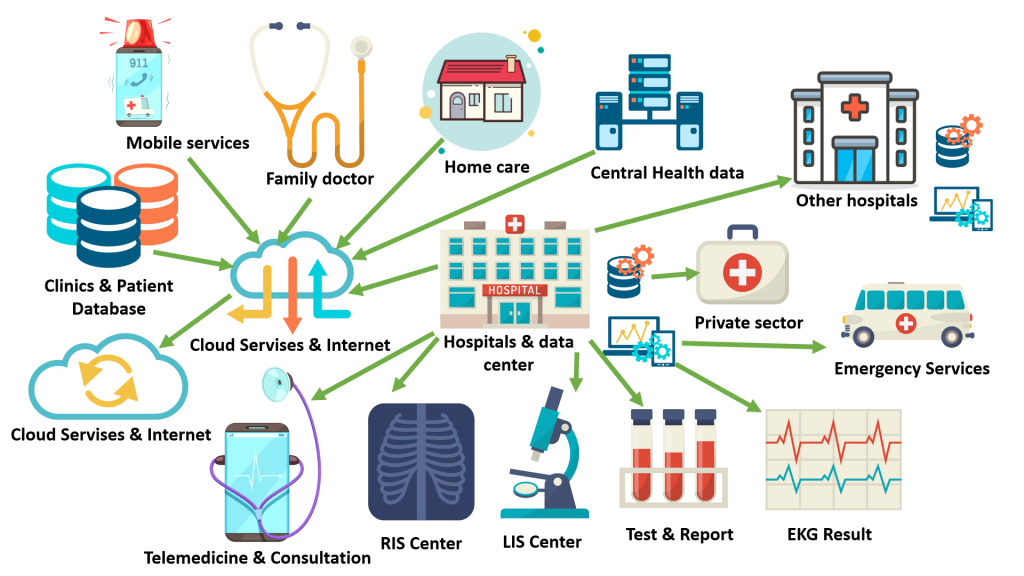
Due to different perspectives of academic research, scientific institutions, and industry there is a lack of comprehensive and precise definition of digital health. Digital health considers eHealth, mHealth, telehealth and telemedicine, public health, personalized medicine, health promotion strategies, self-tracking, wearable devices and sensors, medical imaging, and information systems etc.
we can infer that digital health is about the proper use of technology for improving the health system and well-being of people at individual and population levels, as well as enhancing the care of patients through intelligent processing of clinical and health data.
One of most important challenges for countries are establishing core infrastructure and implementation digital health services. The digitalization of health systems requires the establishment of certain basic elements of infrastructure. digital health technologies are as part of reform initiatives to strengthen national health systems.
These technologies contribute to improving the health and well-being of populations by extending the scope, transparency and accessibility of health services and information; improving service delivery; increasing health system efficiency; and empowering patients as part of a movement towards person-centred care.
Maryam Ghalandari